
Ji, aap theek keh rahe hain. Pichlay response mein citations ki wajah se external links aa gaye thay. Neeche clean publishing version hai: koi external link ya citation nahi, fresh UK English wording aur news style mein.
Table of Contents
Googlebook Officially Arrives as Google Expands Into Premium Android-Powered Laptops
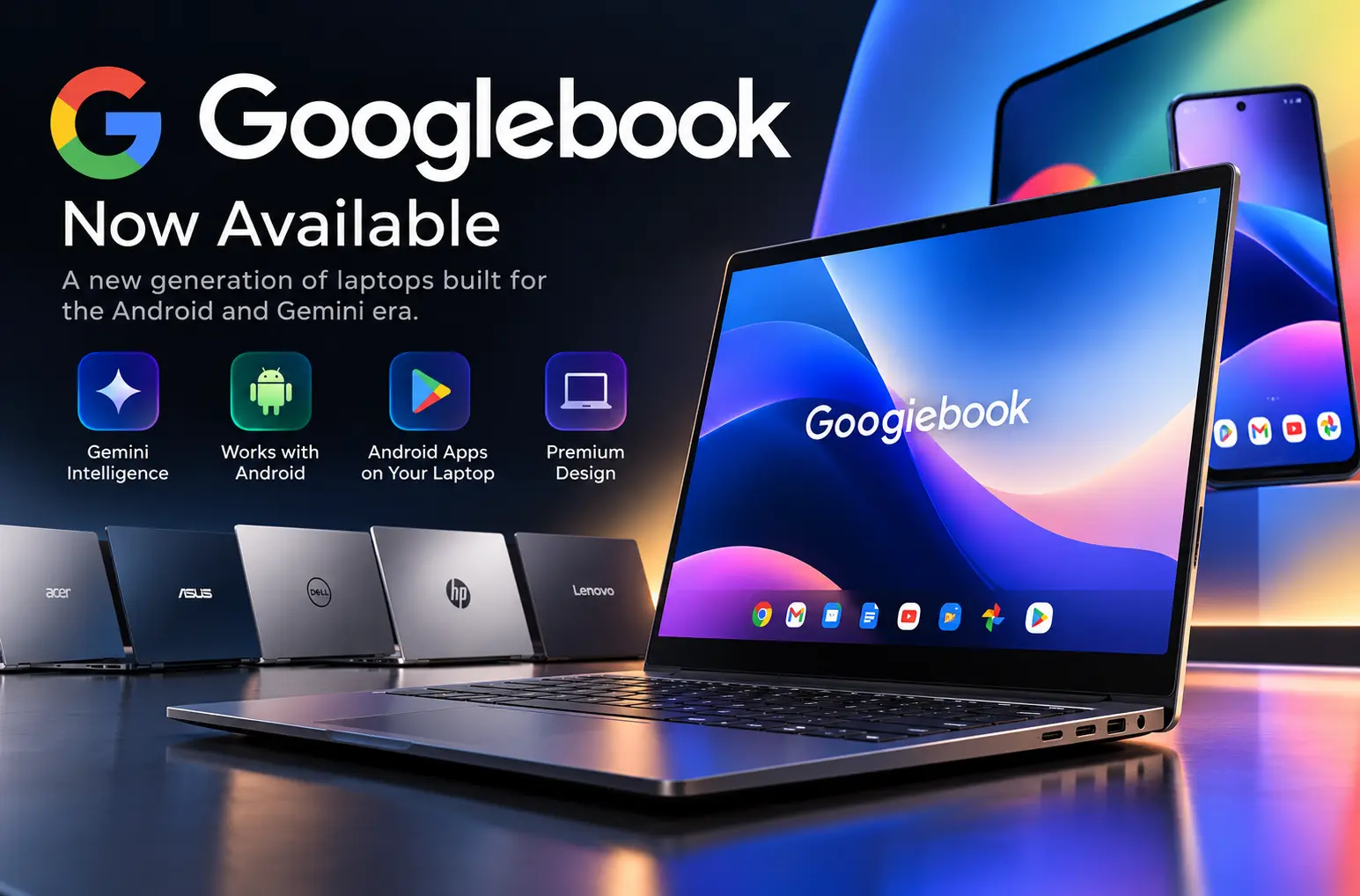
Googlebook has officially arrived, with the first generation of Google’s new laptop platform now available in several major markets, including the UK.
Android announced the latest development with a short message confirming that the wait is over and Googlebook is now available. The launch follows the opening of pre-orders in September and marks an important new chapter for Google in the laptop market.
Rather than introducing a single device, Googlebook represents an entirely new category of laptops. The first models have been developed with leading manufacturers including Acer, ASUS, Dell, HP and Lenovo.
Googlebook Is Now Available in the UK
The first Googlebook laptops reached the US market on 4 October 2026, followed by the UK, Ireland, France, Germany, Canada and Australia on 5 October.
In the UK, prices start from £999, placing Googlebook firmly within the premium laptop category.
The initial range includes five models from Acer, ASUS, Dell, HP and Lenovo. Buyers can choose between different screen sizes, designs and processor configurations depending on their requirements.
This approach gives Googlebook a broader selection from launch rather than relying on one flagship device.
Gemini Intelligence Is at the Heart of Googlebook
One of the biggest differences between Googlebook and a conventional laptop is its focus on artificial intelligence.
Googlebook has been designed around Gemini Intelligence, bringing Google’s AI features directly into the laptop experience.
One of its standout features is Magic Pointer. Users can activate Gemini while working and receive assistance based on the content currently displayed on the screen.
Googlebook also introduces AI-powered tools for organising information, searching files and creating personalised widgets.
Instead of treating AI as an additional application, Google is attempting to make Gemini a more natural part of everyday laptop use.
Built to Work Closely With Android Phones
Googlebook also places considerable emphasis on connectivity with Android smartphones.
Compatible users can move certain activities between their phone and laptop, access phone files from their Googlebook and interact with supported mobile applications on a larger display.
This closer relationship between phone and laptop could be particularly appealing to people who already use Android as their primary mobile platform.
Google Play support also gives Googlebook users access to a large selection of Android applications directly from their laptop.
Some of the more advanced cross-device features require a compatible phone running Android 17 or later.
Intel and Snapdragon Models Are Available
The first Googlebook range includes both Intel Core Ultra and Qualcomm Snapdragon X Elite processors.
Acer, ASUS and Lenovo are among the manufacturers offering Intel-powered models, while Dell and HP have introduced Snapdragon-powered alternatives.
The first generation starts with at least 16GB of RAM, while storage and other specifications vary according to the individual model.
Premium materials, touchscreen displays, modern keyboards and large trackpads also help position the devices above the traditional entry-level Chromebook market.
Googlebook Is Not Simply a New Chromebook
Despite Google’s long history with Chromebooks, Googlebook represents a different direction.
Chromebooks remain focused on ChromeOS and straightforward everyday computing. Googlebook combines technology developed across Android and ChromeOS while placing greater emphasis on performance, premium hardware, Android applications and Gemini.
The distinction is important because Google appears to be targeting users who may otherwise consider premium Windows laptops or other high-end portable computers.
Googlebook therefore sits alongside Chromebooks rather than simply replacing them.
Android App Compatibility Will Be Closely Watched
The arrival of Googlebook also creates an interesting challenge around Android application compatibility.
Googlebook provides access to Android apps, but the experience may differ depending on the processor used inside the laptop. A small number of more demanding applications and games may require additional optimisation for Intel-powered models.
For most users, this may not be a major concern, but software compatibility will be one of the areas to watch as the platform reaches a wider audience.
Developers are also expected to increasingly optimise Android applications for larger displays, keyboards, mice and laptop-style multitasking.
A New Competitor Enters the Premium Laptop Market
Googlebook’s arrival adds another major platform to an already highly competitive laptop industry.
Google is approaching the market differently by combining premium hardware from established PC manufacturers with Android applications, Gemini Intelligence and closer smartphone integration.
The strategy could prove particularly attractive to Android users who want their phone and computer to operate more closely together.
With the first Googlebook laptops now reaching customers, attention will turn towards real-world performance, battery life, app compatibility and the usefulness of Google’s AI features.
For Google, however, the launch represents something bigger than another laptop release. Googlebook is the company’s attempt to create a new premium computing ecosystem built around Android and Gemini.
